Definition
The ability to withstand changing demands over a long period of time.
Experiential Training & Workshop
An experiential training on sustainable resilience for leaders. On Mars, what stays hidden in everyday work becomes measurable: how quickly your own reserves run down and how a team uses its resources wisely.
The future of work
The world of work is changing radically and ever faster. What we have learned quickly becomes outdated; constant high pressure and uncertainty are the result. You could say: every day, we are colonising a new planet of work.
of leaders are exhausted
Heike Bruche-mails and Teams messages per working day
Microsoft Work Trend Index 2025attention span on screen
Gloria Mark→ What this means for leadership tasks, taking people development as an example:
“You hold the same feedback conversation calmly at 9 a.m. and irritably at 6 p.m. after six meetings. The task is the same, the price has gone up.”
O₂Bottom line: We need room to breathe!
Sustainable resilience
The ability to withstand changing demands over a long period of time.
Workload is not the only problem: unnecessary energy drains and a lack of recovery are part of it too.
In the long run, don’t grit your teeth: take on tasks according to strength and capacity, step back consciously and plan in recovery.
What is our Oxymeter display in everyday leadership? On Mars, the Oxymeter makes your reserves visible. In everyday work, nobody sees their colleagues’ reserves, often not even their own. So it is about assessing them correctly and asking about them.
SR = E × (L₁ + L₂ + … + L₆) × C
Why multiply and not add? If one factor is zero, everything is zero: with an empty battery, even the best team levers won’t help. Within the team, on the other hand, the levers add up and can compensate for each other. The duration of the strain is deliberately part of every factor: if recovery is missing for too long, your own reserves fall. If the team does not prioritise and plans no breaks, the team levers fall. And if the organisation is all pressure, with no moments to recharge at a strategic level, the culture falls too.

Mars as a laboratory
A mission is long, the unexpected happens, and resources are constantly scarce. You only have what you bring with you. Mars is everyday work in its most extreme form.
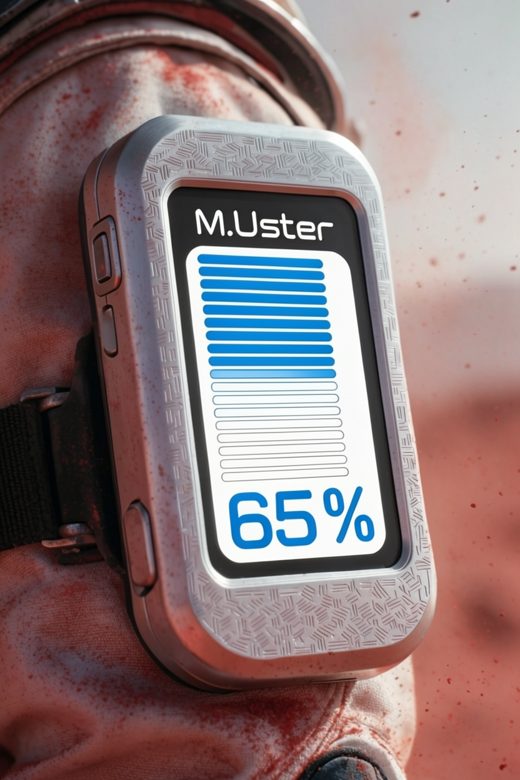
We simulate the strain with the Oxymeter, a real-time device that measures each person’s oxygen reserves based on their pulse. The tasks confront every team member with unfamiliar mental and physical challenges. All technical devices and all challenges are our own developments.
Mission flow
Experience first, then theory. The team levers stay deliberately hidden until after the mission, so that nobody goes into the challenges primed.
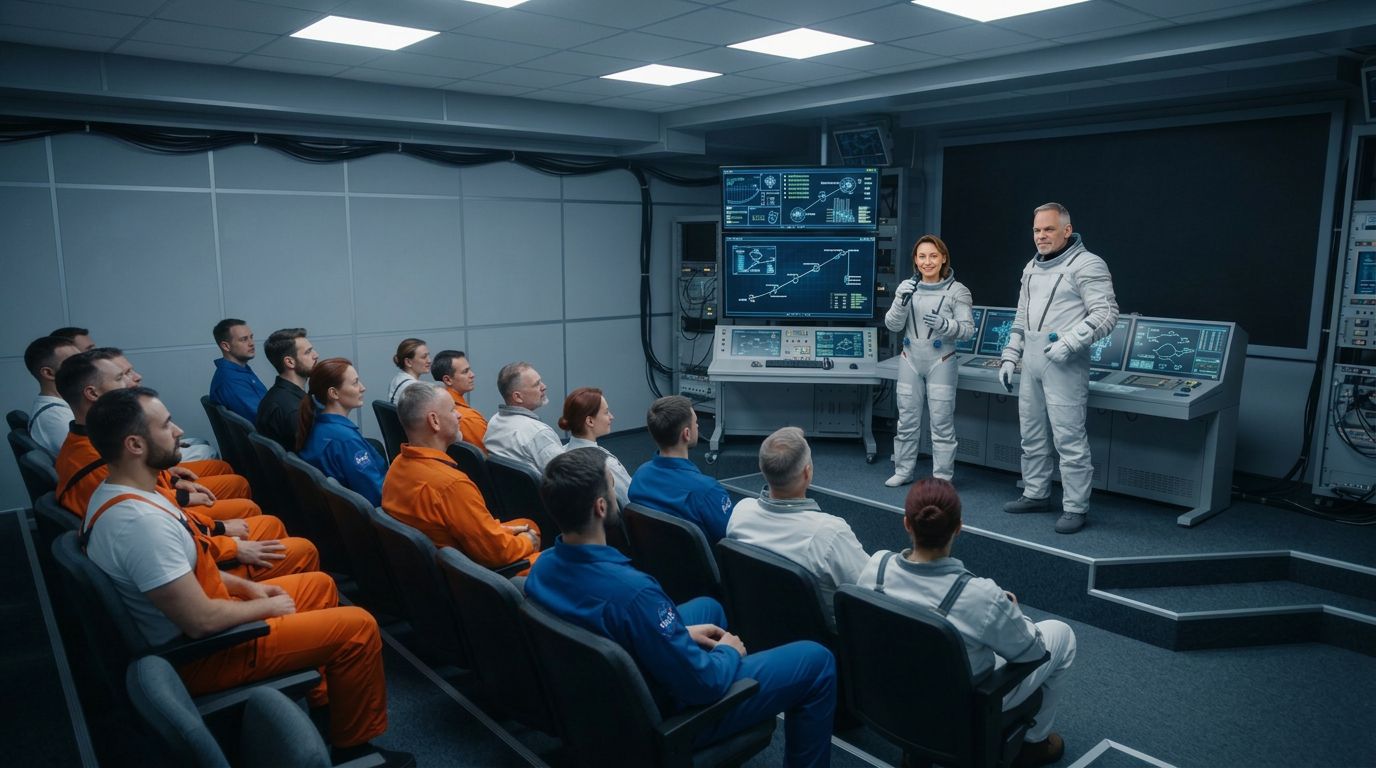
Mission story, teams and Mission Controllers, mission log with two observation tasks, putting on the Oxymeter. Phones stay in the envelope.
PlenaryUp to six challenges in teams, deliberately without breaks and without an assigned leader. Who takes charge emerges on its own.
In teamsStraight afterwards, while everything is fresh: one word per person, celebrating team performance, noting what we will do differently next time.
In teamsReflecting with some distance: personal Oxymeter report (felt vs. measured), then lever by lever with a bridge to everyday work.
PlenaryRe-entry is considered the most dangerous phase of any mission. Everyone fills in their “My heat shield” page: how do I notice that my reserves are dropping, and what do I do then?
TransferThe mission
After the crash of the return probe, the rover’s samples lie scattered. The teams must recover them before the weather worsens. Every challenge brings time pressure, scarce resources and the Oxymeter into play.
 Challenge 1
 Challenge 2
 Challenge 3
 Challenge 4
 Challenge 5
 Challenge 6
Our own technology: Oxymeter, landing simulation, programmable robot with camera, sensor sample. All developed in-house.
Key take-aways
The levels build on each other: if you know your own resources, you can perceive those of your team and shape a culture in your area of responsibility that fosters resilience.
Handling your own resources mindfully and smartly
The team as backup: nobody has to carry everything when strain is visible and tasks can flow.
My contribution to a culture that fosters resilience in my own area of influence
Booking options
On one or more days, Mission on Mars combines experience, technology and methodology into a learning journey with a lasting result.
approx. 4 hours · up to 25 people in 4 teams, one Mission Controller per team
After the Mars mission, we explain your own reserves (lever 0) and four team levers: psychological safety, resource-oriented team management, structured problem solving and clear communication, and context-based decision making
up to 14 people in 2 teams
Like the ½-day workshop on the left, plus:
Three take-aways: My resources are limited. Step back consciously instead of gritting your teeth. The team is my backup. To make sure of this, we explore all 6 levers in depth with a bridge to everyday work.
up to 14 people in 2 teams
Like the 1-day workshop, plus:
Flow and learnings as in the MISSION PACKAGE; in addition, the 6 levers are tried out in everyday situations: peer consulting, peer coaching, feedback. The mission logbook guides you through all days and forms the basis for action planning and recap.
Every organisation is different. We adapt format, duration and focus to your situation. We will be happy to prepare an offer on request.
Discuss a format
Mission graduates
For leaders and decision-makers from different areas, especially in middle management with team responsibility. Mission on Mars also works as a shared team experience.
Mixed teams have an advantage: old role patterns are missing. This makes visible who positions themselves how, and who takes the lead without being asked.
In your luggage
References
Half-day mission workshop as part of an international leadership programme: 25 leaders in four teams, four Mission Controllers.
[add short description: format, target group, number of participants]
Mission Control
Mission on Mars combines the knowledge and enthusiasm of two experienced trainers: methodically designed trainings with more than 10,000 participants and more than 1,000 successful experiential projects.
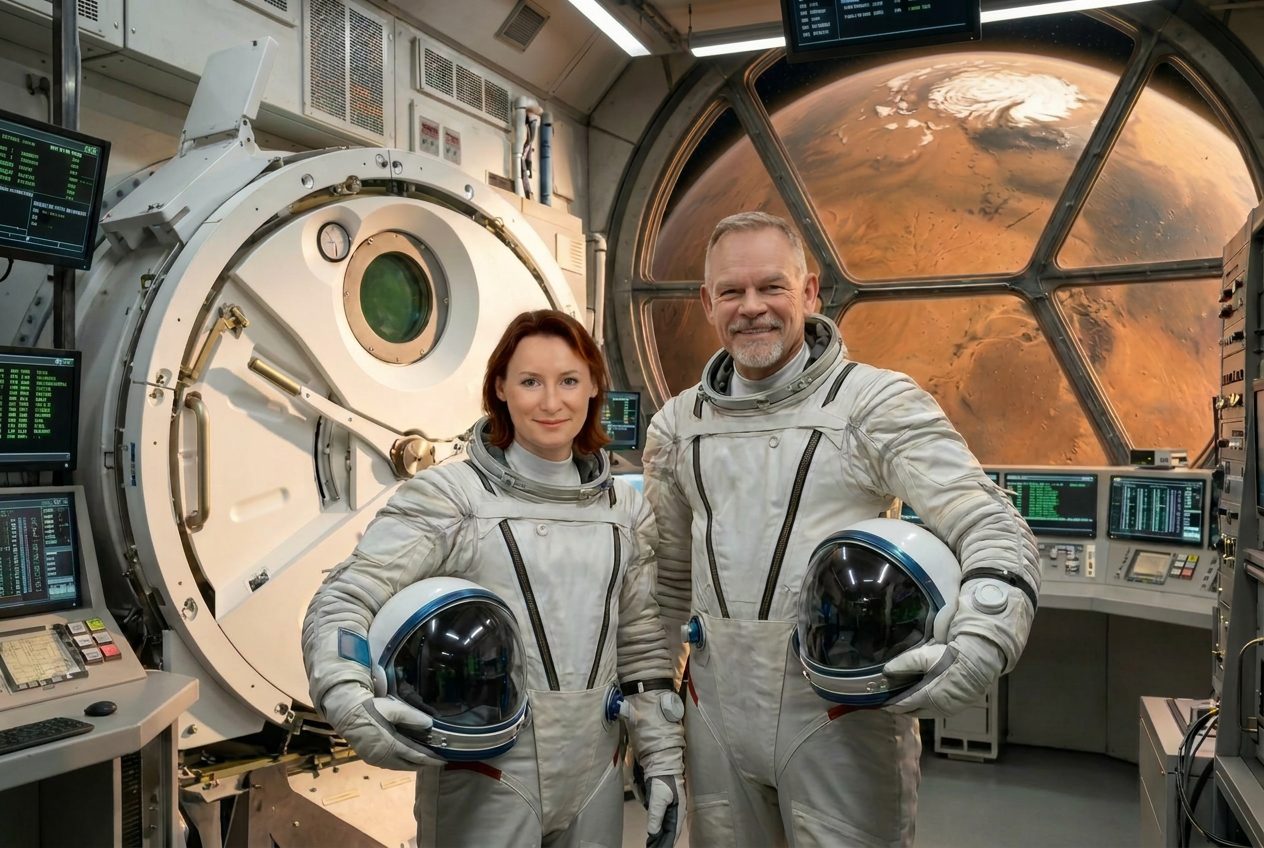

Leadership coach and strategy consultant
20 years of strategy consulting and expertise in designing and delivering leadership and organisational trainings
“Psychological safety creates the space. Curiosity opens up new perspectives. Courage turns insights into lasting change.”

Creative coach and digital change specialist
30 years of developing new technical solutions and experiences. Business coach and software trainer
“Reward responsibility, build trust and inspire courage. Change is a constant, not a programme.”
Contact
Book MISSION ON MARS for your leaders or your team through either KEILMANN TRAININGS or SCOTTISH LAKE. Together with you, we will discuss goals, group size and the format that suits you.
If you contact us by e-mail or phone, we will only use your details to process your enquiry. More on this in our privacy policy.